CVR – Check Valve Repair
Ensure your check valves keep safe and reliable
Your check valve in safe hands
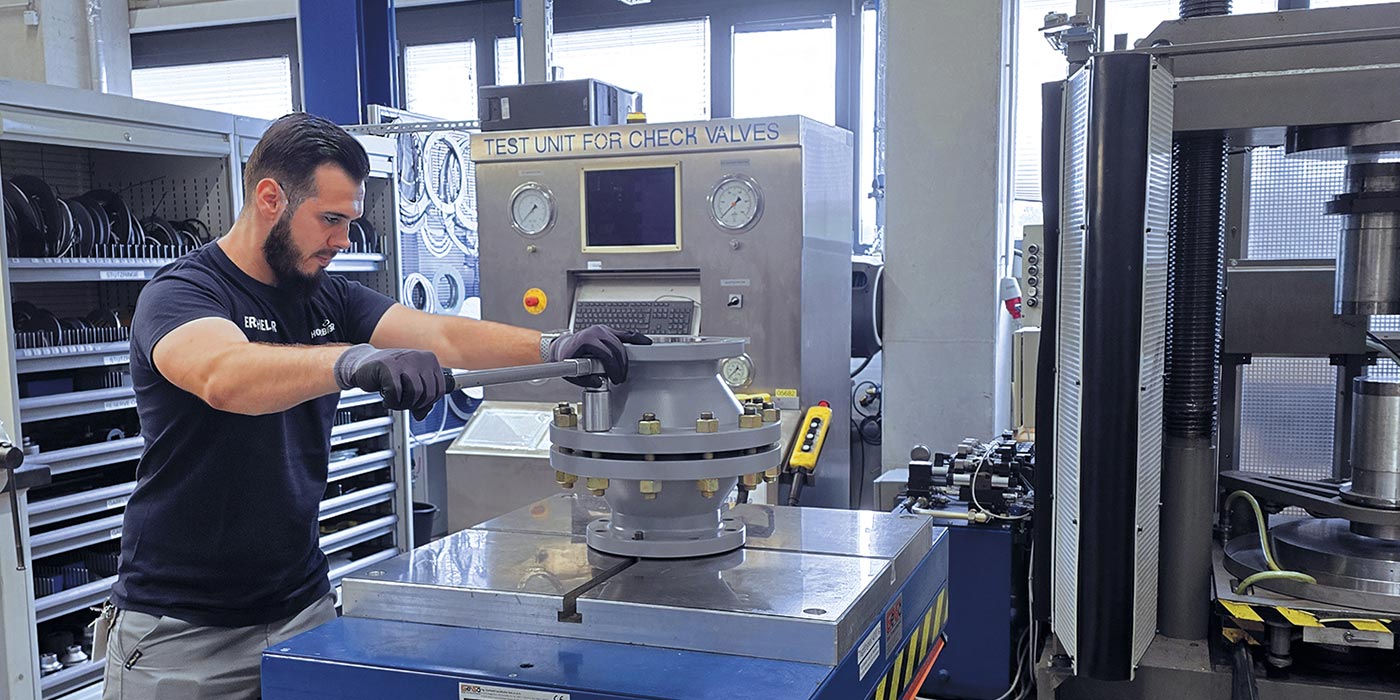
Reliable performance and the mechanical integrity of your check valves is key to the reliable and safe operation of your plant. To ensure this, check valves require regular and proper maintenance, starting with removal of deposits, mechanical integrity checks, replacing wear parts, re-machining sealing surfaces and testing. Our in-house technical support and engineering analyze any abnormal failure modes and offer improvements to you.
Why Check Valve Repair is vital for you:
HOERBIGER check valves are designed to be friction-free. However, depending on the application and the process medium, valve components, such as the valve body and the valve seat, can age over time, which can manifest itself in the form of corrosion and abrasion, but also in the form of embrittlement (cracking). Such aging modes are associated with a reduction in mechanical integrity and impair the safety of your system.
In order to ensure the safety-relevant mechanical integrity of the pressure-bearing parts in particular and to sustain optimum performance, check valves must be properly and consistently maintained.
Regular maintenance offers following benefits:
- Preventing backflow through the recycle valve during a compressor trip
- Ensuring smooth start-up and shut-down of the compressor
- Enabling hot standby operation of a compressor
- Facilitating balanced start-up of (e)HydroCOM controlled compressors
- Documented verification of the mechanical integrity of pressure-bearing parts
When is a Check Valve Repair necessary:
The values given below are to be considered as guidelines. The actual maintenance interval is primarily determined by the maintenance schedule of the unit / the plant in which the valves are installed. According to the Installation, Operation and Maintenance manual, the recommended maintenance intervals depend on the degree of contamination of the process gas and should be applied in accordance with the following guide values:
| Process medium | Recommended maintenance interval |
|---|---|
| Pure, non-corrosive, non-abrasive | 5 – 10 years |
| Slightly soiled, non-corrosive | 2 – 5 years |
| Very abrasive, corrosive medium | 1 – 2 years |
Which types of check valves does HOERBIGER repair?
- HOERBIGER plate check valves
- Bell Type Check Valves (RVA)
- Wafer and Lug-Type Check Valves (RVB, RVBL)
- Integrated Wafer and Lug-Type Check Valves (RVI, RVIL)
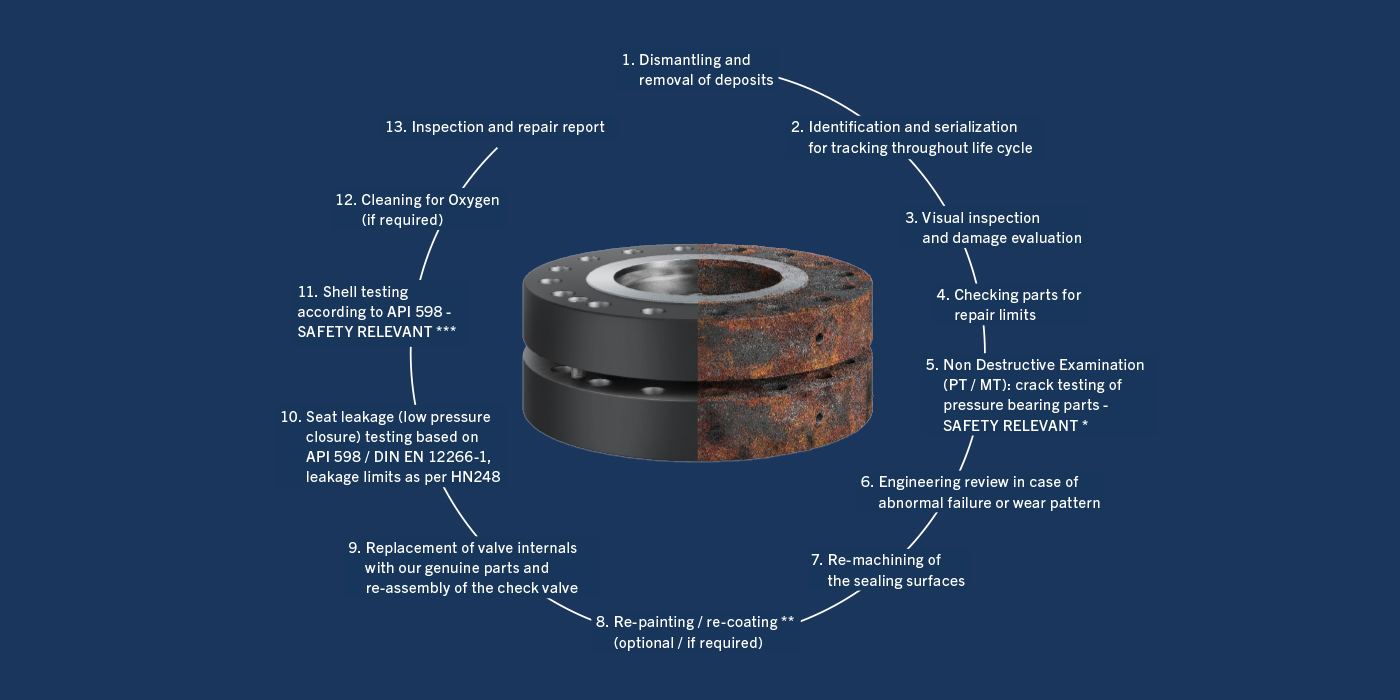
This is how our Check Valve Repair works:
The inspection results are stored in our own repair database, so that upon request we can provide you with comprehensive inspection, repair and test reports.
Why HOERBIGER’s Check Valve Repair?
Trusted Expertise
HOERBIGER is a leading global supplier of reliable non-slam check valves. Backed by passionate and highly skilled employees, we deliver solutions you can depend on.
Premium Service Quality
Our globally standardized repair procedures and qualified technicians guarantee consistent, high-quality repairs. With emergency services available, we ensure minimal downtime and maximum reliability.
Extensive Support
Benefit from our local engineering capabilities, detailed inspection reports, and documented service history. We provide thorough diagnostics and upgrade recommendations tailored to your needs.
Reduces downtime
Fast turnaround times through our global network of service workshops help minimize downtime.
Genuine Parts and Network Access
As the world’s largest plate check valve manufacturer, HOERBIGER offers genuine parts and access to a worldwide network of workshops located close to you – ensuring fast, reliable service wherever you are.
* NDE crack testing is safety-relevant and aim to verify the mechanical integrity of the pressure bearing parts. Crack testing is therefore part of the standard repair procedure.
** Two options for the re-painting / re-coating of the housings are available:
- Standard coating: 1 layer one component-zinc dust paint based on ethyl silicate
- Customer specific: Coating according to customer specific painting procedure
*** Shell (leakage) tests are performed as part of the standard repair procedure for Bell Type Check Valves (RVA). For the other housing styles, shell tests can be carried out at the customer's request. The standard test is the pneumatic shell leakage test according to API 598. The test is carried out with N2 at 110% of the design pressure and proofs the strength of the shell and the leakage free assembly. Optionally, the hydrostatic shell test according to API 598 is performed with water at 150% of the operating pressure.
The periodic monitoring of pressure equipment may be subject to national legislation. These legal regulations may have to be followed by the operator of the pressure equipment independently of the tests carried out by HOERBIGER.
A4
How can we help you?
Let us know if you need assistance or have questions – one of our compression representatives will contact you as soon as possible.
Don’t miss out on the latest news!
Sign up below to receive the latest news and updates from HOERBIGER about our compression products and services.