“Those who learn to manage AI today will remain employable tomorrow.”
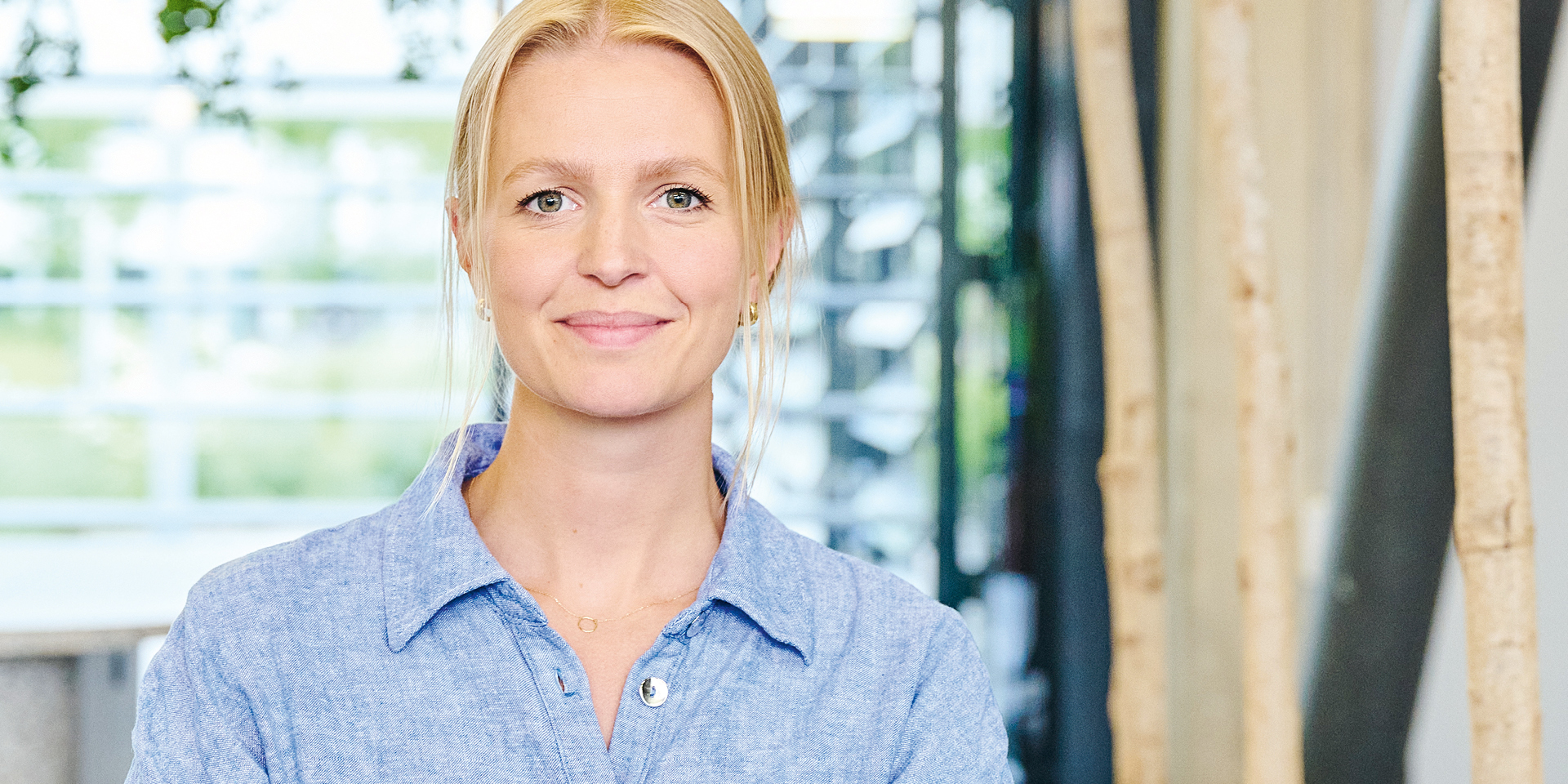
Hanna Brands is in charge of implementing modern work methods and artificial intelligence at HOERBIGER. Her task is as simple as it is complex: to serve as a translator between IT and users and to explain technology in a way that ensures it is understood and put to use.
Since June 2025, Hanna Brands has served as Global Modern Work & AI Lead at HOERBIGER, overseeing the group-wide implementation of modern work methods and AI-powered tools. Previously, she worked as a New Work Advisor and member of the executive board at the consulting firm Blackboat, where she had already advised HOERBIGER in a consulting capacity. Her professional career began at Fielmann AG, where she held various positions in corporate communications over a period of seven years. Hanna holds a Bachelor of Science in Business Administration from Elmshorn University of Applied Sciences and has pursued advanced studies in the fields of New Work, internal and change communication, and negotiation skills.
Hanna, you first got to know HOERBIGER as an external consultant. What made you decide to switch sides?
It was the way people worked at HOERBIGER: a dialogue among equals, regardless of hierarchy or role. I was also fascinated by the team’s international character. It’s the first position in my career where I work with people from very different cultures on a daily basis. That’s great and offers me a steep learning curve. And even in the first few days, it was clear how much HOERBIGER values employee development.
Your title is “Global Modern Work & AI Lead.” It’s a job title that needs some explanation.
It certainly does. Modern work is meant to make work easier, more transparent, and more effective – whether in the office or remotely, across teams and locations. My role is to bridge the gap between IT and users and explain technology in a way that ensures it’s understood and put to use. Added to this is the field of artificial intelligence (AI): we systematically identify use cases where AI can replace manual tasks and free up time for more challenging work.
“Modern Work” often means new tools, new processes, and new habits. Change isn’t always met with enthusiasm. What’s your strategy for getting employees on board?
I listen to find out where barriers exist. Skepticism almost always has a rational basis, and it’s important to understand that before making your case. At the same time, I work closely with those who want to pioneer change and use them as advocates. I find one phenomenon particularly noteworthy, though: in our personal lives, we embrace digital tools with great enthusiasm. In a professional context, however, we approach the same tools with skepticism. And this is even though continuous innovation is a given when it comes to HOERBIGER products.
You’re currently rolling out Microsoft Copilot at HOERBIGER. Let’s be honest: how enthusiastic are your colleagues about AI?
More so than you might think. Unlike with traditional IT topics, the added value of AI becomes apparent quickly through trial and error. There are friction points, for example when the machine generates content that isn’t accurate. But the overall attitude is positive.
Why did HOERBIGER choose Microsoft Copilot rather than one of the many alternatives on the market?
Because it’s the solution that integrates most reliably into our reality. HOERBIGER has been working with M365, Microsoft’s cloud solution, for years. So, Copilot builds directly on the tools our employees already use every day. Another important factor is security: Copilot processes content within our existing Microsoft environment, under the authorization and compliance rules we’ve already established.
HOERBIGER works closely with Microsoft. What makes this partnership so valuable?
Microsoft has offered us the opportunity to participate in an exclusive program for mid-sized companies. The partnership works both ways. Microsoft wants to understand the needs we have as a mid-sized industrial company, and we learn how a technology company of this magnitude thinks and operates. This gives us deep insight not only into current technology, but also into what’s coming next. Through our close contact with the experts and regular discussions about the effective use of these tools, we stay on the cutting edge of development. And at this pace, that’s the decisive advantage.
AI is rapidly transforming the world of work. How should colleagues deal with this?
The most important point, in my opinion, is that you must be able to assess what the technology can do – and what it can’t. Only those who can do that are also able to evaluate how AI is changing their own work environment and where its use is truly worthwhile. You acquire this ability to judge through active use, patience, and the courage to try things out for yourself. Those who learn to work with AI today will remain employable tomorrow. The feeling of never quite being up to date is part of the process.
What has recently surprised you in a positive way – or totally annoyed you – when using AI?
I was positively surprised by the quality of Anthropic’s Claude models, which currently noticeably outperform those from OpenAI. We’re testing them on a limited scale, and the associated agent handles entire tasks. The autonomy of these systems is growing rapidly. Less encouraging is the pricing policy of the major providers. It’s understandable that they need to recoup their investments. For companies, this creates significant challenges in cost management.
If you had to formulate three basic rules for working with AI – what would they be?
First: Stay curious and be patient. If you’re just starting out, you’ll need practice with prompts. The first results are rarely the best. Keep trying, rephrase, and ask questions. If you give up too soon, you’ll miss out on the true potential.
Second: Use only the tools that have been approved by your organization. Data security and privacy should be top priorities in a business environment.
And finally: Double-check every result before you use it. Whether it’s an email, document, or presentation: question the result and its sources. AI is a powerful tool, but it still makes mistakes. The responsibility for what we use from AI lies with us.
Finally, on a personal note: you’re rarely seen without a laptop. What do you do when you’re offline?
When I do disconnect, it’s on my yoga mat. Or over a good meal with family and friends.